

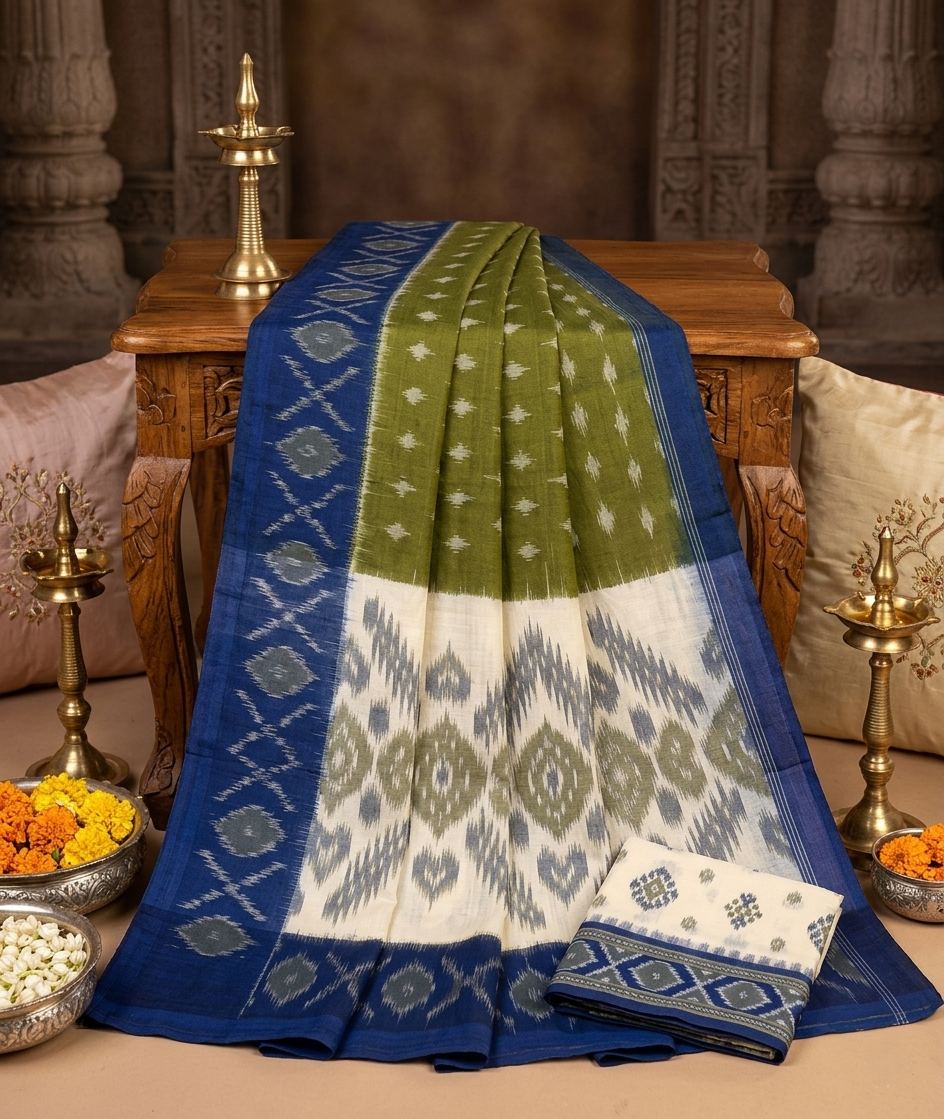
The Art of Double Ikkat Weaving There is something deeply soulful about a garment that breathes with the history of its makers. This Elegant Pochampally Ikkat pure cotton Saree is a masterpiece hailing from the famous weaving clusters of Telangana. Known globally for its unique “Chitki” or tie-and-dye technique, Pochampally Ikkat involves a meticulous process where the warp and weft threads are dyed before being woven on the loom. The result is a mesmerizing blur-effect pattern that is the hallmark of authentic Ikkat. This specific piece celebrates that heritage, bringing a slice of Indian culture directly into your contemporary wardrobe.
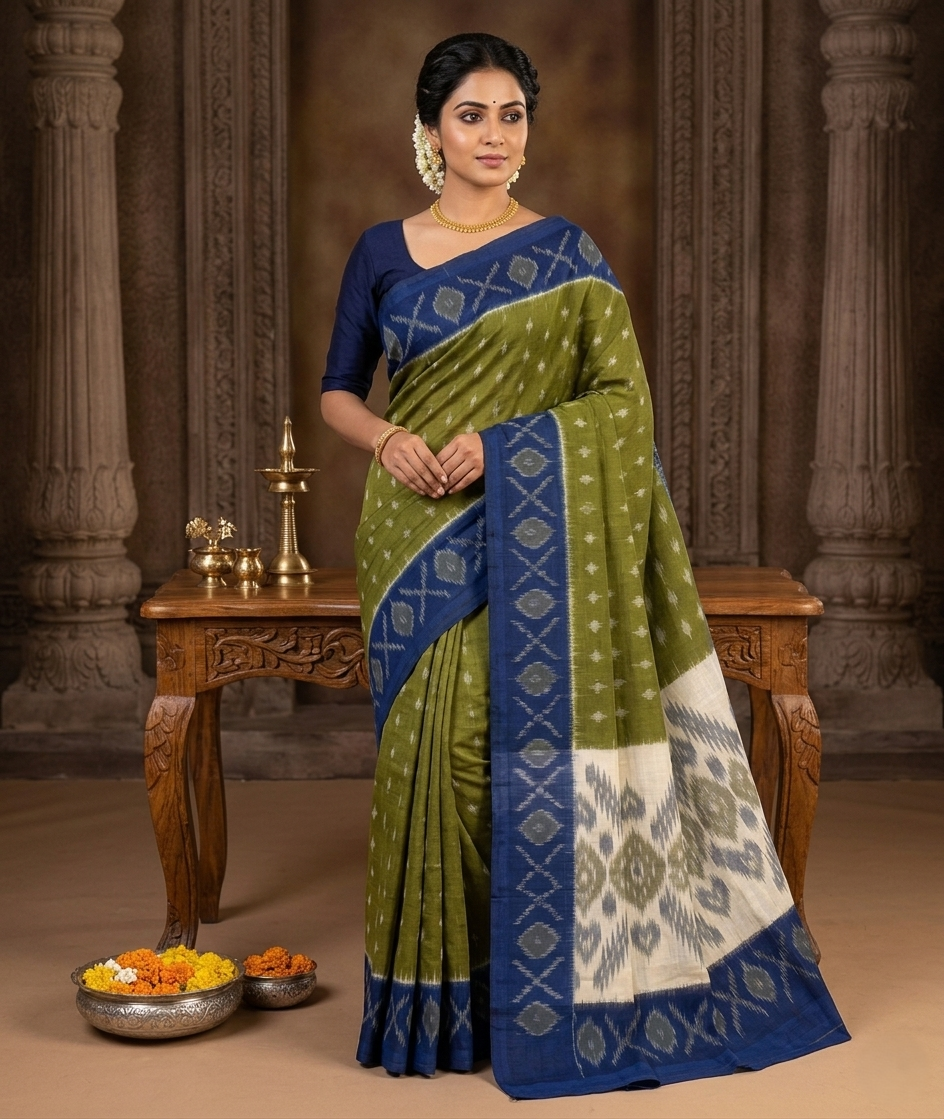
A Color Palette of Earth and Sky The aesthetic appeal of this saree lies in its thoughtful color play. The body is rendered in a rich, earthy olive green—a shade that exudes calmness and understated luxury. Floating across this green expanse are delicate white Ikkat butis, resembling tiny diamonds that catch the light. To provide a bold contrast, the saree is framed by deep royal blue borders. These borders are not merely solid colors; they house elaborate diamond and chevron motifs that represent the mathematical precision required in traditional Ikkat weaving. The transition from the olive body to the blue pallu is seamless, creating a visual harmony that is striking and captures the eye perfectly.
Unmatched Comfort of Mercerized Cotton While silk often takes the spotlight for grand occasions, an Elegant Pochampally Ikkat pure cotton saree is the true unsung hero of a versatile wardrobe. This saree is crafted from high-quality mercerized cotton, a process that strengthens the fibers and gives the fabric a subtle, silk-like luster without the high maintenance of silk. It is incredibly breathable, making it a savior for the Indian climate. Whether you are attending a long wedding ceremony or a high-stakes boardroom meeting, the fabric drapes beautifully around the silhouette, maintaining its shape and keeping you comfortable for hours.
Styling Your Elegant Ikkat The beauty of an elegant cotton saree is its adaptability. For a formal professional look, pair this saree with a crisp, plain navy blue elbow-length blouse and minimal silver jewelry. The contrast of the matte cotton against oxidized silver accents creates a sophisticated “Indo-Western” vibe. If you are dressing up for a festival or a housewarming ceremony, swap the plain blouse for a sleeveless one and add a temple-jewelry choker and a fresh string of jasmine in your hair. The rich blue pallu, when pinned or left flowing over the shoulder, serves as a statement piece in itself.
A Sustainable Choice for the Modern Woman In an era of fast fashion, choosing a handwoven Pochampally Ikkat pure cotton saree is a step toward conscious luxury. Every thread tells a story of a weaver’s skill and hours of manual labor. By owning this piece, you aren’t just buying a saree; you are preserving a craft that has been passed down through generations. It is a timeless addition to your collection—one that won’t go out of style and can be passed down as a cherished heirloom.
To ensure your Pochampally Ikkat pure cotton saree retains its vibrant colors and structural integrity for years, proper care is essential. Handwoven cotton, especially those with intricate resist-dye patterns, requires a gentle touch to prevent bleeding or fiber breakdown.
Care & Maintenance
-
First Wash: For the initial wash, we strongly recommend dry cleaning. This helps “set” the natural dyes and prevents the deep royal blue from bleeding into the delicate olive and white motifs.
-
Subsequent Washes: If hand-washing at home, use cold water and a mild, pH-neutral detergent or “Ezee.” Never soak the saree for more than 5–10 minutes.
-
Drying: Avoid direct sunlight, as UV rays can fade the rich Ikkat pigments. Always shade-dry the saree inside out to maintain its luster.
-
Ironing: Use a medium-heat setting. It is best to iron the saree while it is slightly damp or use a steam iron to achieve that crisp, professional finish.
-
Storage: Store your saree in a breathable cotton bag or wrap it in a soft muslin cloth. Avoid using plastic covers, as they can trap moisture and lead to mildew. Refold the saree every few months to prevent permanent creasing along the fold lines.
Frequently asked questions
01How long will delivery take?+
Delivery time depends on your location. You can check the delivery estimate at checkout.
02Is it returnable?+
Please see our Return Policy for return eligibility and details.

Reviews
There are no reviews yet.